
Kansas CDL preparation should begin with the exact vehicle and job, not a generic “truck license” label. The Kansas Department of Revenue Division of Vehicles handles credential requirements, publishes the fee chart and handbook, and lists the offices that conduct commercial skills testing. Those skills exams are appointment-only.
Last verified: September 9, 2026.
Kansas CDL Quick Facts
| Item | Current Kansas requirement |
|---|---|
| CDL agency | Kansas Department of Revenue, Division of Vehicles |
| Minimum age | 18 for Kansas intrastate operation; 21 for unrestricted interstate and placarded HazMat work |
| Regular CDL permit | $13 total: $5 permit issuance plus $8 photo fee |
| New CDL with testing, age 21+ | $41 total on the current chart: $18 issuance, $15 test, and $8 photo fee |
| Endorsement | $10 each |
| Skills exam | $15; skills retest $10 |
| Skills-test locations | KDOR publishes 11 offices; exams are by appointment |
| Medical record | Since June 2, 2025, Kansas says medical certification must arrive electronically from the National Registry |
| Official handbook | Download the Kansas CDL Handbook (PDF) |
The fee chart separates issuance, testing, photo, endorsement, and retest charges. Verify the total for your age, transaction, and endorsements before visiting.
Kansas Medical and Document Rules
Applicants must establish identity, lawful status, Social Security number, Kansas residency, and the correct commercial self-certification category. Non-excepted drivers generally need a current medical qualification. Kansas no longer manually enters a paper medical certificate when the required result should come electronically from the certified medical examiner through the National Registry.
Check the record before the CLP or CDL appointment. A clinic receipt is not proof that KDOR has received the electronic result.
Choose Your Kansas Practice Module
| Your goal | Knowledge area | Start here |
|---|---|---|
| Initial permit | General Knowledge | General Knowledge diagnostic |
| Class A | Combination Vehicles | Combination diagnostic |
| Air-brake truck | Air Brakes | Air Brakes diagnostic |
| HazMat | Hazardous Materials | HazMat diagnostic |
| Tank vehicle | Tank Vehicles | Tanker diagnostic |
| Doubles/triples | Doubles and Triples | Doubles diagnostic |
| Skills test | Pre-trip inspection | Pre-Trip diagnostic |
Kansas CDL Application Steps
- Choose Class A, B, or C and all needed endorsements. Match the decision to vehicle ratings, trailer, cargo, and passenger capacity.
- Study the current Kansas handbook. Cover General Knowledge and every class or endorsement section required for the permit.
- Complete identity, residency, medical, and self-certification requirements. Confirm that the electronic medical result is visible when required.
- Pass the knowledge exams and obtain the $13 CLP. Practice only with a properly licensed accompanying driver.
- Complete ELDT when federally required. The provider must appear in the FMCSA registry and report completion.
- Hold the CLP at least 14 days. Use the time for vehicle inspection, basic control, and public-road practice.
- Call a listed Kansas skills-testing office. KDOR says exams are by appointment; some locations have limited staff.
- Bring a representative vehicle. Its class, brake system, transmission, and coupling can determine restrictions.
- Finish issuance and pay the applicable itemized fees. Do not confuse the $18 issuance component with the total new-license transaction.
Kansas Farm Operations and Reciprocity
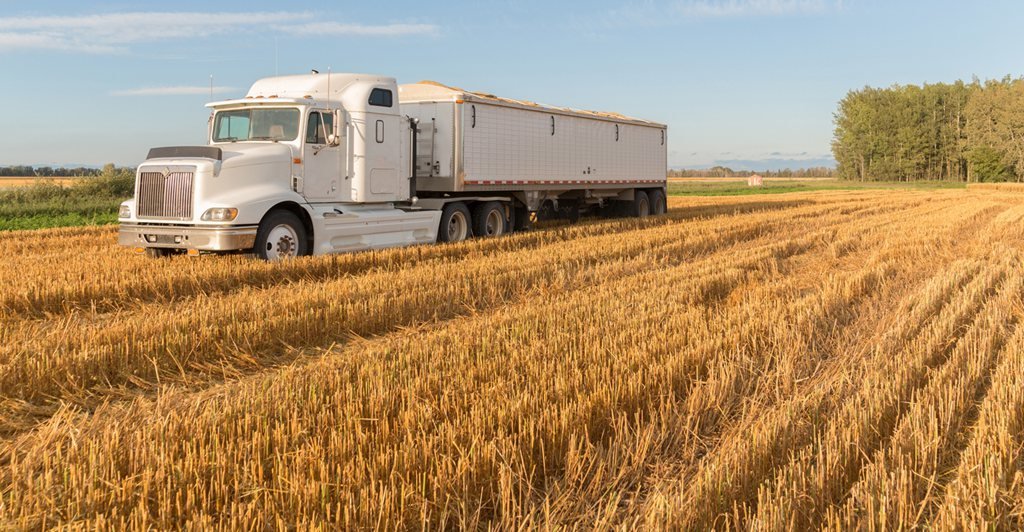
Kansas publishes specific CDL farm-use reciprocity agreements with Missouri, Nebraska, and Oklahoma. That does not mean any agricultural load may cross any border without a CDL. The operator’s relationship to the farm, vehicle ownership or control, cargo, for-hire status, distance, and each agreement’s language matter.
Before relying on an exemption, read the agreement for the destination state and confirm the exact trip with KDOR or enforcement. A CDL exemption also does not automatically remove registration, weight, insurance, hours-of-service, or vehicle-safety obligations.
Kansas Skills and Road Priorities
- Crosswinds: Empty and lightly loaded trailers require lower speed, smooth steering, and readiness to stop when conditions are unsafe.
- Rail crossings: Grain and industrial routes create frequent crossings; passenger and HazMat vehicles have additional duties.
- Restriction prevention: Testing in automatic-only or non-air-brake equipment can reduce job options.
- Inspection language: Learn why a defect is unsafe instead of memorizing a disconnected script.
Official Sources
- Kansas Department of Revenue: Commercial Driver’s License
- Kansas Department of Revenue: CDL Handbook (PDF)
- Kansas Department of Revenue: Credential Fee Chart (PDF)
- Kansas Department of Revenue: CDL Skills-Testing Offices
- FMCSA: Entry-Level Driver Training
FAQ
How much is the Kansas commercial learner’s permit?
The KDOR fee chart lists $13 total, including the permit issuance and photo fee.
Is a new Kansas CDL only $18?
No. $18 is one issuance component. The chart lists $41 total for a new CDL with testing for applicants over 21 before optional endorsements.
Do Kansas CDL skills tests require an appointment?
Yes. KDOR publishes the participating offices and directs applicants to call ahead.