
This page is specifically about the Florida CDL skills test—where to take it, what must be complete before scheduling, which vehicle to bring, and how to avoid preventable restrictions. For permit requirements, knowledge tests, current state fees, and the complete licensing overview, start with the Florida CDL Practice Test and Requirements guide.
Florida uses authorized CDL skills-testing locations, and the practical details can differ by provider. Do not assume every driver license office gives commercial road tests or that every testing site supplies a vehicle.
Florida Skills-Test Readiness Check
Before paying a provider or reserving a test, confirm every item below.
| Readiness item | What to verify |
|---|---|
| Florida CLP | Valid, correct class, and correct endorsements/restrictions |
| Minimum holding period | At least 14 days before taking the skills test |
| ELDT | Required completion is posted by an FMCSA-registered provider |
| Medical status | Current and correctly matched to the self-certification category |
| Test site | Authorized to test the class and vehicle configuration you need |
| Test vehicle | Safe, registered, insured, and representative of the intended license |
| Accompanying driver | Properly licensed for the test vehicle and endorsements |
| Appointment terms | Arrival time, cancellation rule, retest fee, and weather policy |
| Final transaction | Know where to complete CDL issuance after passing |
A provider’s test charge, truck rental, training package, and rescheduling fee are different things. Request an itemized total rather than treating an advertised price as the statewide Florida fee.
1. Find the Correct Florida Testing Location
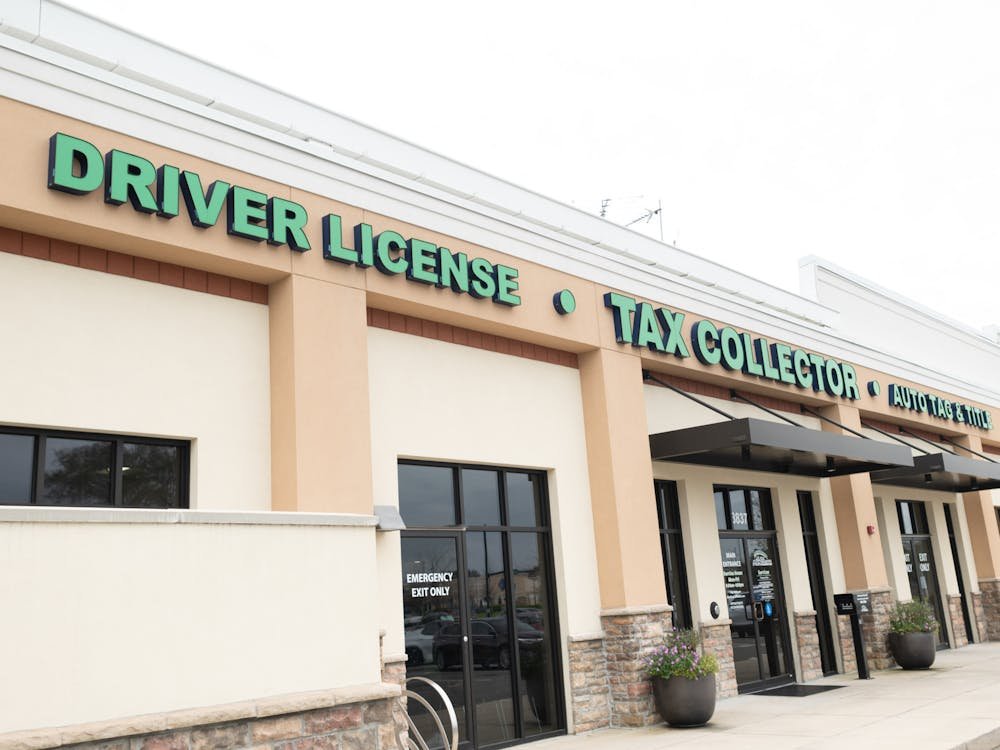
Start with Florida Highway Safety and Motor Vehicles information and confirm that the location is authorized for commercial skills testing. County tax collector offices and state-operated locations do not all provide the same services. A location that handles CDL issuance or knowledge testing may not administer a Class A or Class B road test.
Ask the testing site these questions before scheduling:
- Does the site test Class A, Class B, passenger, or school-bus applicants?
- Does it provide the entire test or only selected segments?
- Is a test vehicle available, and what configuration is it?
- Are registration and insurance included with a rental?
- What is the full charge for the test, vehicle, cancellation, and retest?
- How early must the applicant arrive?
- What happens if weather or equipment stops the test?
- How and when are passing results transmitted?
Use the answer—not distance alone—to choose the site. A nearby automatic Class B truck is not a suitable choice for an applicant who needs unrestricted Class A tractor-trailer authority.
2. Confirm CLP and ELDT Eligibility
The commercial learner permit must match the vehicle used for testing. Check the class, passenger or school-bus restrictions, and whether air-brake or other limitations already appear.
First-time Class A and Class B applicants, Class B drivers upgrading to Class A, and applicants obtaining their first passenger or school-bus endorsement must complete applicable Entry-Level Driver Training before the skills test. The provider must be listed in the federal Training Provider Registry and must report completion electronically.
Do not rely only on a course-completion email. Confirm the record is available before traveling to the test site.
HazMat ELDT follows a different path because the H endorsement uses a knowledge test and federal security threat assessment rather than a HazMat road test. Review the Florida CDL requirements guide for the complete sequence.
3. Choose a Vehicle That Produces the License You Need
The vehicle is part of the licensing decision. It should represent the class and operating systems needed for the intended job.
Class and combination
A Class A applicant normally needs a representative combination vehicle with a towed unit rated over 10,000 pounds and a qualifying combination rating. Testing in a smaller or different configuration can result in a lower class or a restriction.
Air brakes
Testing without a full air-brake system can lead to an air-brake restriction. Combination air-over-hydraulic equipment can produce a different result from a full-air system. Confirm the configuration with the testing provider before reserving the vehicle.
Manual transmission
Testing in an automatic vehicle can add an automatic-transmission restriction. Applicants who expect to operate manual-transmission equipment should test in an appropriate manual vehicle after adequate training.
Tractor-trailer configuration
A Class A applicant who tests without a tractor-semitrailer configuration may receive a restriction affecting the combinations that can be operated. Ask the provider exactly what credential the rental vehicle is designed to produce.
4. Inspect the Vehicle Before the Examiner Does
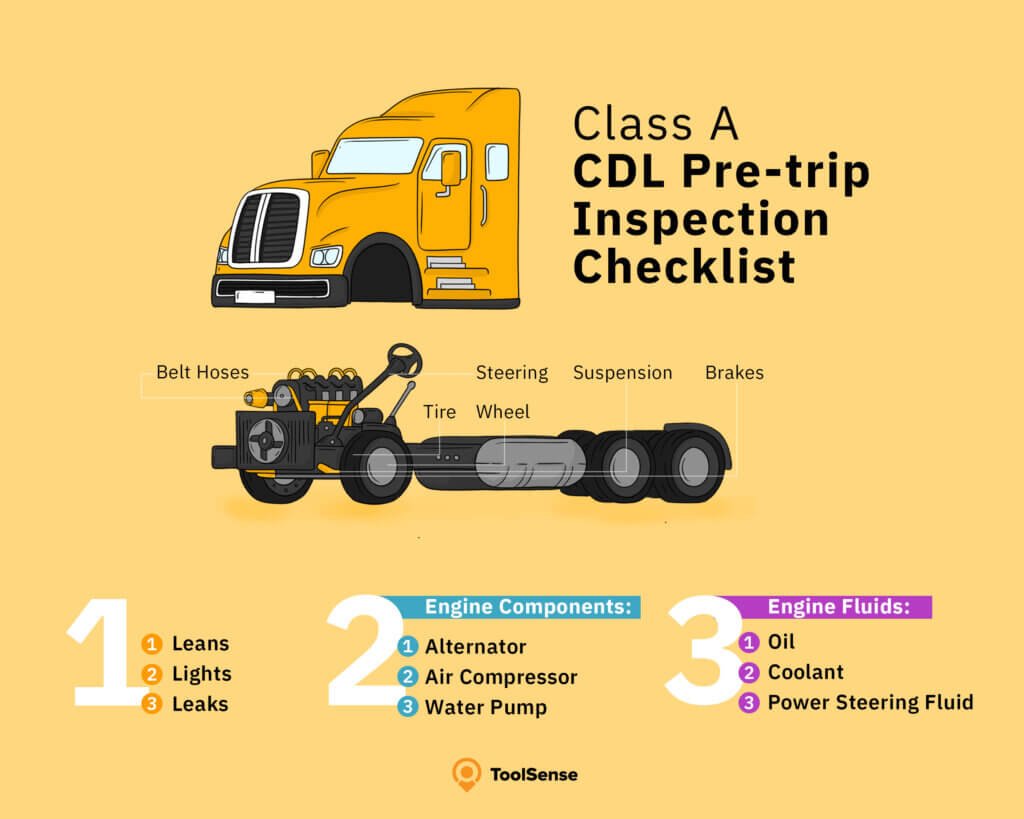
A failed vehicle-safety check can end the appointment before the scored test begins. Check the equipment early enough to repair or replace the vehicle.
Verify:
- current registration and proof of insurance;
- tires, wheels, rims, lug nuts, hubs, and visible leaks;
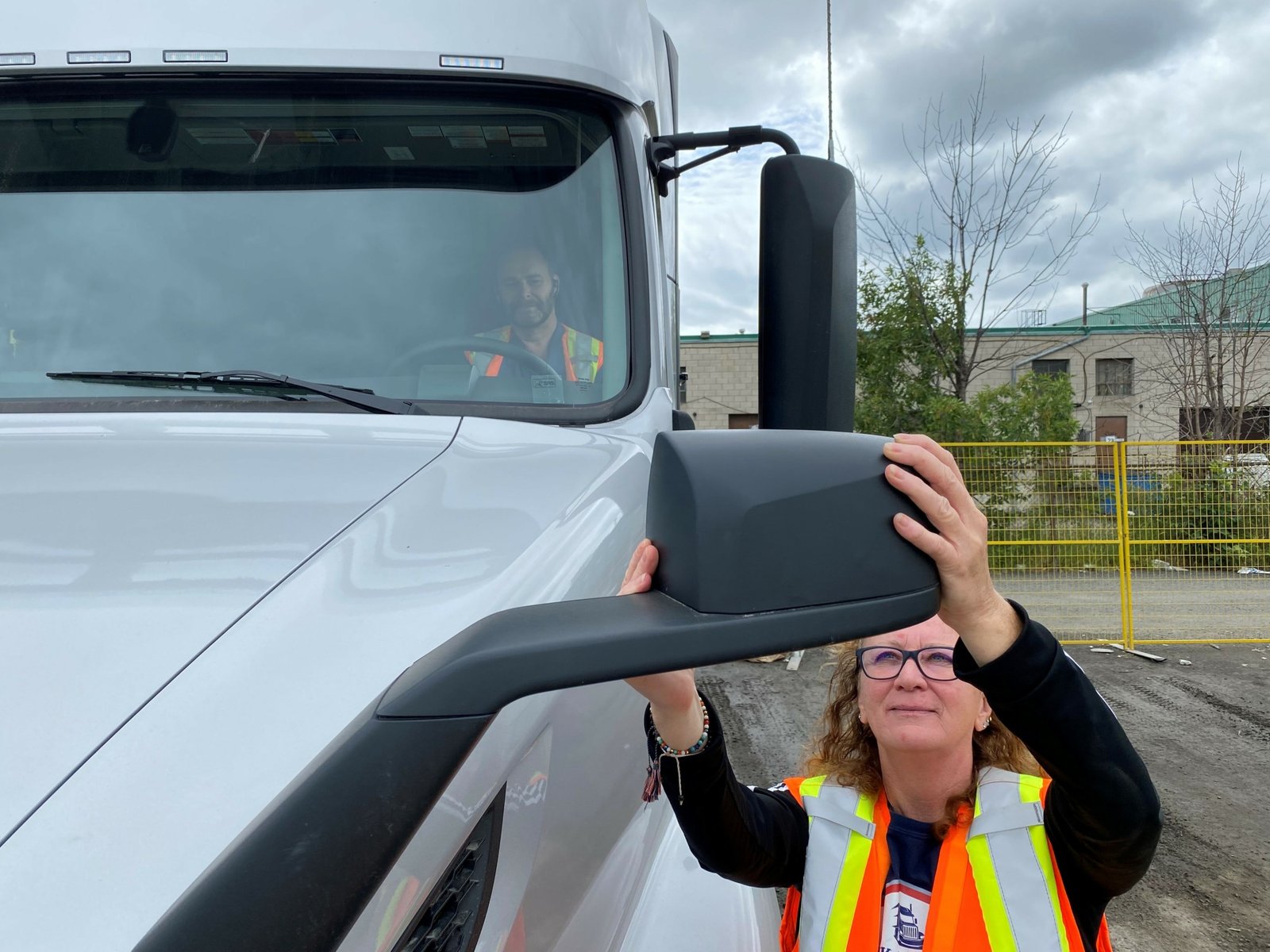
- lamps, reflectors, windshield, mirrors, wipers, and horn;
- steering, suspension, frame, coupling devices, and landing gear;
- brake components, hoses, chambers, slack adjusters, and warning devices;
- emergency equipment and secure cargo;
- seat belts and safe seating for the examiner;
- air-pressure build-up, warning, protection, and parking-brake functions when applicable.
Do not place labels on components to coach the inspection. The applicant must identify and explain the items without prohibited assistance.
5. Understand the Three Test Segments
Vehicle inspection
The applicant identifies safety-critical components, explains what is being checked, and describes disqualifying defects. Memorizing a script without understanding the vehicle often fails when the examiner changes the starting point or asks a follow-up question.
Use one repeatable route around the vehicle:
- engine compartment and steering;
- front axle, suspension, brakes, wheels, and tires;
- side, frame, fuel or exhaust, and cargo;
- coupling system and trailer;
- rear axle and rear equipment;
- cab checks and applicable air-brake procedure.
Basic control skills
The control segment measures accurate low-speed placement. The maneuvers used by a site follow the applicable testing standard, but the applicant should be prepared to control the vehicle with proper observation and without unsafe encroachments.
Practice setup points, mirror scanning, small corrections, pull-ups, and stopping before a boundary. A memorized wheel count that worked in a different truck is unreliable.
On-road driving
Expect evaluation of intersections, turns, lane position, speed control, signs, railroad crossings when available, expressway or multilane operation when the route permits, and general traffic awareness.
Florida-specific preparation should include heavy rain, standing water, sun glare, dense urban traffic, tourists unfamiliar with local roads, and long stopping distances on wet pavement.
6. Test-Day Checklist
Bring or confirm:
- valid driver license and Florida CLP;
- medical eligibility when required;
- appointment confirmation and provider receipt;
- properly licensed accompanying driver;
- vehicle registration and proof of insurance;
- safe test vehicle with no warning defects;
- glasses, hearing aids, or other required equipment;
- any provider-specific paperwork.
Arrive at the time required by the provider. Commercial tests take time, and a late arrival can consume the reserved testing window. Do not drive the commercial vehicle to the appointment alone unless your current license already authorizes it.
7. If You Do Not Pass
Ask which segment was failed and whether passed segments remain valid for the next attempt. Retest timing and provider charges should be confirmed with the testing site and licensing office; do not assume the policy of one provider applies statewide.
Use the score feedback to plan practice:
- inspection failure: rebuild the component sequence and defect explanations;
- controls failure: practice setup, observation, boundaries, and correction strategy;
- road failure: work on the cited decisions with a qualified instructor.
Do not immediately reserve the same vehicle if its configuration, condition, or visibility contributed to the result.
8. Complete Florida CDL Issuance
Passing the skills test is not the final licensing transaction. Follow the provider and FLHSMV instructions for transmitting results and completing issuance. Verify that the final credential contains the intended class and endorsements and does not contain an unexpected transmission, air-brake, or combination restriction.
If something is wrong, address it before accepting work that requires authority not shown on the license.
Related Florida Preparation
- Florida CDL Practice Test and Requirements
- Florida CDL Handbook guide
- General Knowledge diagnostic
- Air Brakes diagnostic
- Combination Vehicles diagnostic
- Pre-Trip Inspection diagnostic
Official Sources
- FLHSMV — Commercial Motor Vehicle Drivers
- FLHSMV — Locations and Services
- FMCSA Training Provider Registry
- FMCSA CDL overview and restrictions